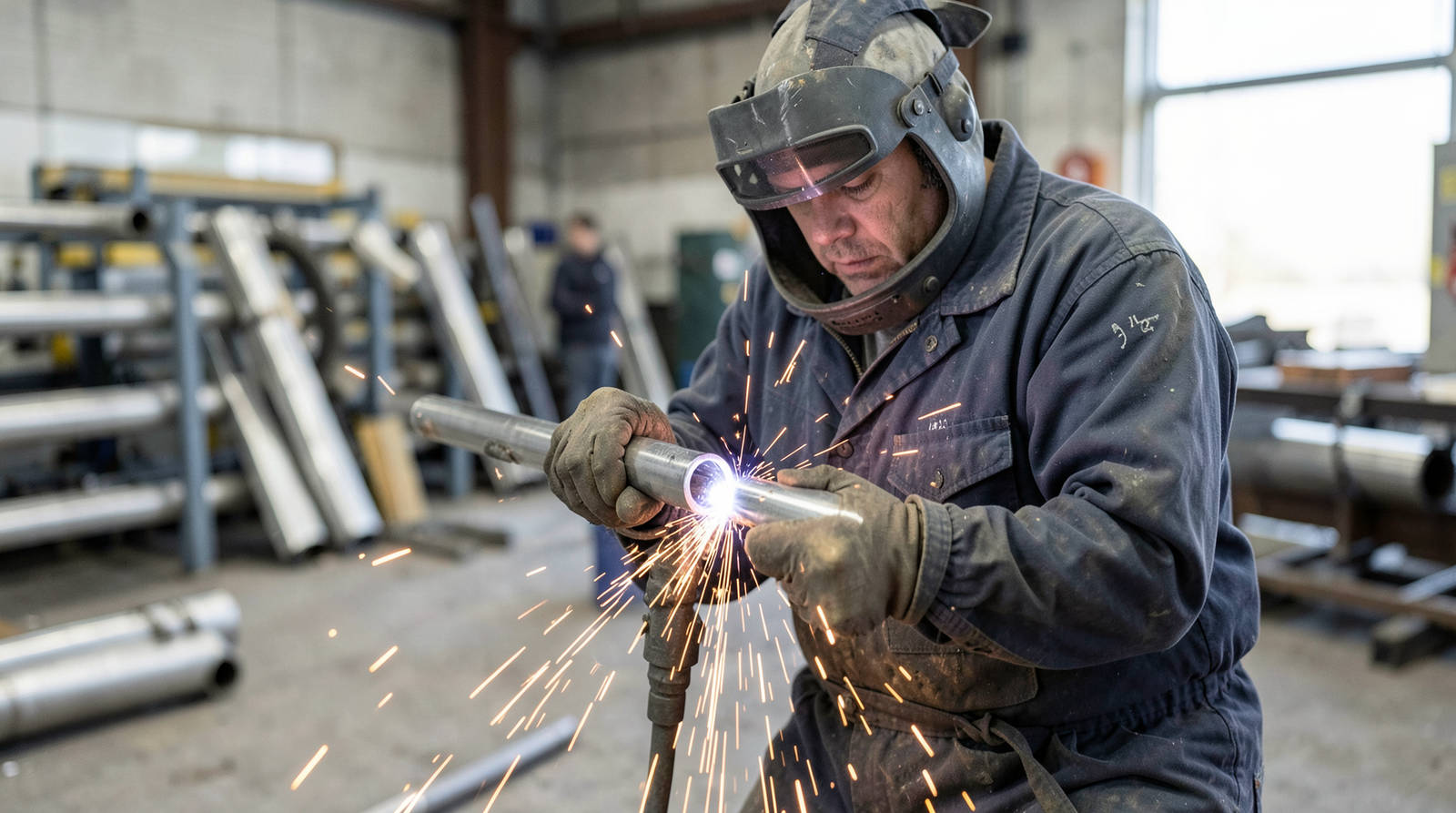
A weld can look sound at handover. Metal beside the seam can retain corrosion conditions. Welding heat can modify grain-boundary chemistry inside austenitic stainless piping. A narrow zone stays exposed after that change. Exposure comes with entry into corrosive service.
What Sensitization Actually Is
Intergranular corrosion attacks along grain boundaries. It also attacks metal immediately beside them. Most of each grain stays intact. Sensitization is the usual weld form in stainless steel. Chromium-rich precipitates develop at grain boundaries. Nearby metal has less chromium left to resist corrosion. The affected area can be very narrow. An overall pipe surface inspection may miss the weld zone. That part needs attention.
A description of 347 stainless steel tube properties identifies columbium. Columbium is also the name used for niobium. In 347 and 347H it acts as the stabilizer. Tantalum is listed as an optional addition. That chemistry adds one control to the piping specification. The control covers a known metallurgical risk. The fabrication plan can make sensitization a realistic concern. Service conditions can make sensitization a realistic concern.
How Titanium and Niobium Stop It
Stabilized grades alter the carbon reaction behind sensitization. Either titanium or niobium traps carbon in carbides. Chromium-rich carbides form less at grain boundaries. Such formation can happen during welding. Later heat exposure can bring the same formation. Stabilization exists to serve that purpose. A suitable welding procedure remains necessary.
Stabilization matters. The weld thermal cycle does not end when the arc moves on. Material adjacent to the bead can see repeated heating. Its response depends on its composition. Its response depends on heat received in fabrication.
See also: How to Plan and Personalize a Modern Barn-Style Custom Home Build
How Carbides Form
Stainless steel gets much of its corrosion resistance from chromium. Chromium-rich carbides form at grain boundaries. Those precipitates pull chromium from the adjacent metal. The depleted band can become vulnerable. Grain interiors still retain their expected composition.
AMPP describes how chromium depletion drives intergranular corrosion. Sensitization is a classic stainless steel example. Chromium does not disappear from the whole pipe wall. Chromium collects at the precipitation sites. A narrow area beside the grain boundary resists corrosive attack poorly.
Multi-pass welding often acts as the trigger. Later passes reheat zones affected by earlier ones. Pass count exceeds mere shop detail. Weld sequence exceeds mere shop detail. A thick-wall joint can expose part of the HAZ. A repair weld or weld build-up can too. HAZ means the heat-affected zone. A single-pass coupon misses those cycles.
A procedure review should connect the joint design to the thermal history. Record the pass count the joint requires. Record later welds that reheat earlier HAZ material. Record repeated fabrication cycles near the same seam. A base-metal designation alone does not answer those questions.
Knife-Line Attack
Knife-line attack concerns stabilized grades. It is not another name for general sensitization. AMPP calls it a narrow form of intergranular corrosion. Carbides of titanium or niobium form in the HAZ. They form next to the weld bead. Fast cooling can leave those carbides packed in that narrow band. Diffusion cannot move them out of that band.
The location changes the diagnosis. Sensitization means chromium loss from precipitation at grain boundaries. It is a broad description. Knife-line attack names a thin weld-side zone in stabilized metal. Calling both conditions sensitization can send a review into error. The review may take the wrong failure account.
AMPP states reheating welded metal can correct knife-line attack. Reheating then lets diffusion occur. The claim covers only the knife-line mechanism described above. It leaves out other intergranular corrosion near a weld. The failure site must match the proposed remedy. The part thermal history must match that remedy too.
Specification Checkpoints
The service and fabrication record should guide grade choice. Pick a stabilized grade or an L grade from that record. Do not copy a material designation from an earlier piping class. Both grades address the carbide issue. Each grade uses a different chemistry. A label alone does not predict performance. The actual weld cycle must be included. Service conditions the component will actually see matter.
Before writing material and welding requirements, check:
- Expected operating temperature and time at temperature.
- Whether the completed spool or assembly can be annealed after welding.
- Whether multi-pass welding or repair work will reheat the HAZ repeatedly.
- Grade data for creep and corrosion behavior in intended service.
The supplier description for 347 and 347H is a vendor claim. Creep and stress-rupture properties exceed 304. Those same properties exceed 304L too. The description identifies them for welded equipment. No anneal is available for that welded equipment. The claim is not a general ranking for every piping duty. Compare it with the project design basis. The approved material requirements and the weld procedure belong in that comparison. Do this before treating it as a selection decision.
Consult materials science resources for broader background on grade data. Ask whether the expected weld thermal cycle creates a credible sensitization concern. The selected chemistry is meant to control that concern. Ask this in a specification review.
Where to Go from Here
A stabilized grade is appropriate in a piping specification. The weld thermal cycle makes chromium-carbide sensitization credible. Later service raises the same concern. The decision should connect the metallurgy to the fabrication plan. The plan includes repeated reheating. Annealing limits stay on that plan. Expected service temperatures remain included.
Keep knife-line attack separate during that review. It occurs in a narrowly defined HAZ region of stabilized steel. It has its own thermal explanation. General sensitization wording does not describe it well enough. Review the grade data before writing the piping specification. Review the weld procedure requirements before writing too.