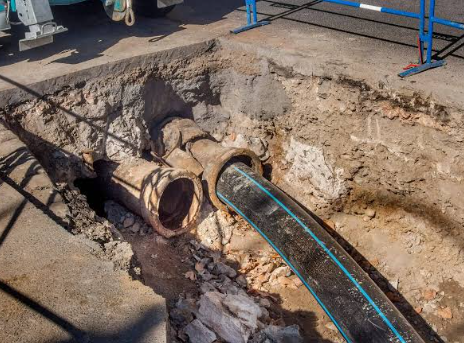
Trenchless sewer repair isn’t automatically better than traditional excavation, and it isn’t necessarily cheaper. But it’s often a great option and less expensive when you compare trenchless sewer repair vs traditional methods. And, it’s growing in popularity in residential homes.
The right choice depends on what’s wrong with your sewer pipe, where it’s located, how much of the line is affected, and what sits above it. When considering trenchless sewer repair vs traditional methods, the decision starts underground and figuring out exactly what the problem is.
Start With the Condition of the Existing Sewer Line
Before choosing a repair method, you need to know what failed.
A sewer camera inspection is a good place to start. A professional plumber can use a flexible, waterproof camera to look inside the line and identify conditions such as cracks, root intrusion, corrosion, separated or offset joints, sagging sections, and collapsed pipes.
The inspection can also help determine whether damage is confined to a short section or extends farther through the sewer line. Only then does it make sense to compare repair options against industry pipe rehabilitation guidelines.
Trenchless Sewer Repair Pros and Cons
The biggest advantage here is the lack of excavation, which can disrupt your landscaping and add to your costs. However, there are also some disadvantages you should consider. Here are the trenchless sewer repair pros and cons.
| Pros | Cons |
| Requires little or no large-scale excavation. | Not suitable for every damaged sewer line. |
| Helps preserve landscaping, mature trees, driveways, patios, and other hardscaping. | Severely collapsed or misaligned pipes may require excavation. |
| Can reduce labor and restoration work compared with traditional trenching. | Specialized equipment and experienced technicians are required. |
| Often completed faster than conventional sewer replacement. | Upfront costs may be higher than some conventional repair methods. |
| Pipe lining can create a new, durable interior surface inside an existing pipe. | Pipe lining slightly reduces the pipe’s interior diameter. |
| Minimizes disruption to the home and property. | The existing pipe must be evaluated to determine whether lining or bursting is feasible. |
| Particularly useful where digging is difficult or expensive, such as areas with hard caliche soil. | Certain obstructions, extensive structural damage, or unusual pipe configurations may limit trenchless options. |
| Methods such as pipe lining can address cracks, corrosion, leaks, and deteriorating older pipes. | Additional spot repairs or excavation may still be necessary in some cases. |
When Traditional Excavation May Be the Better Fit
Traditional sewer repair exposes the damaged pipe by excavating the area above and around it. While that means more ground disturbance, direct access to the pipe can be advantageous (and necessary) for some problems.
For example, excavation may be appropriate when a sewer line has severely collapsed, moved substantially out of alignment, or developed a sag or belly that needs to be physically corrected. It may also make sense when the failed section is short and easy to reach. If the pipe lies beneath an accessible area with few surface improvements, excavation and restoration may be relatively straightforward.
In other words, digging isn’t automatically the inferior choice. For some sewer failures, direct access is precisely what the repair requires.
Why Trenchless Doesn’t Automatically Mean Cheaper
One of the biggest misconceptions about trenchless repair is that less digging automatically produces a lower bill. It can reduce certain costs associated with excavation and restoration, but the total project depends on multiple variables, including:
- Pipe condition
- Length of the repair
- Depth of the sewer
- Accessibility
- Repair method
- Amount of excavation required
- Surface restoration after the work
Consider two sewer lines with similar damage. One runs beneath an open section of yard where crews can readily excavate. The other runs beneath a driveway and established landscaping. The underground problem may be comparable, but the conventional projects could have substantially different excavation and restoration requirements.
That’s why a trenchless sewer repair vs traditional cost comparison should account for the entire job rather than assuming that whichever method involves less digging will necessarily cost less.
Compare the Entire Project, Not Just the Pipe
So, when considering the repair, you’ll want to think about these factors that impact whether trenchless sewer repair vs traditional methods are best.
| FACTOR | TRENCHLESS | TRADITIONAL |
| EXCAVATION | Typically limited | More extensive |
| SURFACE DISRUPTION | Usually less | Can be significant |
| ACCESS TO PIPE | Limited direct exposure | Direct access |
| SUITABLE CONDITIONS | Depends on method and pipe | Can address many physical failures |
| SURFACE RESTORATION | Often reduced | May require significant restoration |
| COST | Depends on project | Depends on project |
The Property Above the Sewer Line Matters, Too
What’s above the pipe can have a major impact on the project. A line beneath open dirt or your lawn may be relatively accessible. Move that same pipe beneath mature landscaping, decorative pavers, a patio, or a driveway, and excavation becomes more disruptive.
That can change the value proposition of limiting excavation, even if the sewer damage itself hasn’t changed. It’s also why homeowners should understand where their sewer line runs before comparing repair estimates.
Make the Decision After You Know What Failed
Instead of deciding in advance that you want one particular repair method, start with these questions:
- What is wrong with the sewer pipe?
- Where is the damage located?
- How much of the line is affected?
- What is above the damaged section?
- Which repair methods are technically appropriate?
- What excavation and restoration would each option require?
Once those questions are answered, you can evaluate the trenchless sewer repair pros and cons for your specific property rather than relying on general assumptions.
When your sewer line needs repair, have George Brazil Plumbing & Electrical evaluate the damage and walk you through the appropriate options so you can understand what each approach means for your Phoenix-area home before work begins. Schedule sewer line repair service today.