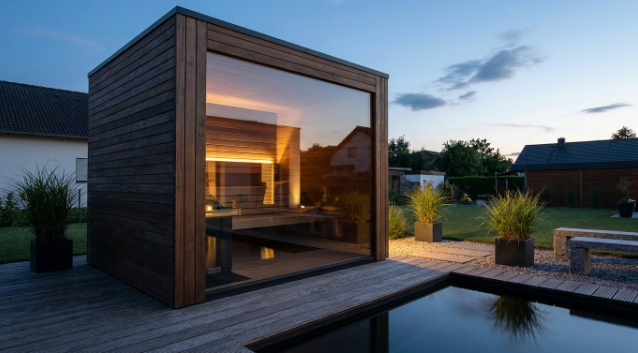
A cube sauna built for cold-winter use needs double-wall insulated panels, a heater sized generously above the standard one-kilowatt-per-40-cubic-feet rule, a foundation that will not heave with freeze-thaw cycles, and door seals checked more often than in a mild climate, since cold air finds every small gap far more aggressively than a mild fall evening does. None of that requires a fundamentally different sauna, just a build and a maintenance routine that accounts for what sustained sub-freezing temperatures do to wood, insulation, and foundations over an entire winter.
How Much Longer Does Preheat Take in Cold Weather?
Expect preheat to stretch 10 to 20 minutes past what the same heater achieves in mild weather, because the cabin is losing heat through the walls, door, and any vent gaps the entire time the heater is working to build it up. A heater sized right at the minimum for the cabin’s volume in a temperate climate often struggles to reach target temperature in a Northern winter, so it is worth sizing a notch above the standard one-kilowatt-per-40-cubic-feet guideline if the unit will run through genuinely cold months rather than just shoulder seasons.
What Changes About the Cabin Construction Itself?
Double-wall panel construction, with an insulating layer sandwiched between an inner and outer wall board, holds heat dramatically better through a cold winter than a single-wall panel, and the difference shows up directly in both preheat time and how quickly the cabin cools once the heater shuts off. A single-wall cube sauna can still work in a cold climate, but the heater will run harder and longer to compensate, and the interior will lose comfortable warmth faster the moment someone opens the door. Weatherstripping around the door deserves a closer look before winter than it does the rest of the year, since a compressed or cracked seal that was a minor inefficiency in October becomes a real heat leak once temperatures drop well below freezing.
Does the Foundation Need to Change for a Cold Climate?
Frost heave, the ground swelling as moisture in the soil freezes and expands, can shift a foundation that was perfectly level in the fall by the time spring thaw arrives, and a cube sauna’s flat-panel construction shows that shift as gapped seams and a door that no longer closes flush. A gravel pad can still work in a frost-prone region if it is built deep enough with proper drainage underneath, but a foundation that sits below the local frost line, typically concrete footings poured to the depth your area’s building code specifies, holds level far more reliably across repeated freeze-thaw cycles than a surface-level pad. Check with a local contractor on your area’s frost depth requirement before pouring anything, since it varies significantly by region.
What About Snow Load and Roof Design?
A cube sauna’s roof, whether a low-pitch pent style or a slightly peaked design, needs to be rated to carry the snow load typical for the region, and a roof that was fine for a mild climate’s occasional dusting can sag or leak under a genuinely heavy winter snowpack. Clearing accumulated snow off the roof periodically during a heavy winter, rather than letting it pile up all season, reduces stress on the structure and keeps meltwater from pooling and finding its way into seams that were never built to hold standing water for weeks at a time.
Is the Hot-Sauna-to-Cold-Snow Routine Actually Common?
Going from a hot cabin directly into snow or a cold plunge is a long-standing practice among regular sauna users in genuinely cold climates, and it is where much of the traditional Finnish sauna culture pairs heat exposure with a sharp cold contrast. It is also a real thermal shock to the cardiovascular system, and it is worth easing into gradually rather than starting with a full snow roll on day one, particularly for anyone new to sauna use or with any cardiovascular risk factors, who should check with a healthcare provider before trying it.
What Does the Broader Research Say About Cold-Climate Sauna Use?
The core research behind sauna’s documented health associations comes largely out of Finland, a country whose climate is about as cold as it gets, which means the underlying data was gathered in populations already using saunas through long, genuinely cold winters. Reviews summarizing that evidence, including work published in Mayo Clinic Proceedings and a broader review in the American Journal of Physiology on heat and cold exposure, describe consistent associations between regular sauna use and favorable health outcomes in exactly this kind of climate, though again as association rather than proven causation. There is nothing in that research suggesting cold-climate use is less beneficial than warm-climate use; if anything, the opposite population is where most of the data originates.
Shopping for a Cold-Climate Build
When comparing units meant to hold up through a real winter, look specifically for double-wall insulated construction and a heater rated generously for the cabin’s volume rather than the bare minimum. Several retailers spec this clearly on individual product pages; checking SweatDecks’ lineup against at least one other seller’s winter-rated options is a reasonable way to compare insulation and heater sizing before deciding on a build for a genuinely cold region.
Frequently Asked Questions
Does a cube sauna take longer to heat up in winter?
Yes, expect preheat times to run 10 to 20 minutes longer than in mild weather, since the heater has to fight ongoing heat loss through the walls and door in below-freezing outside temperatures. A heater sized generously for the cabin’s volume matters more in a cold climate than in a mild one.
Can a cube sauna sit on a gravel pad in a frost-prone climate?
A gravel pad can work if it is built deep enough and drains well, but in areas with significant frost heave, a foundation that extends below the frost line, such as concrete footings, holds level far more reliably over multiple freeze-thaw cycles.
Do cube sauna heaters need extra insulation for winter climates?
The heater itself does not need extra insulation, but the cabin’s wall panels do; double-wall construction with insulation between the layers holds heat significantly better in sustained cold than a single-wall panel design.
Is it safe to go from a hot cube sauna into snow?
Many regular sauna users do this safely, but it is a significant thermal shock and not something to try without easing into it gradually, and it carries real risk for anyone with cardiovascular conditions. Anyone unsure should check with a healthcare provider first.
References
- Benefits and risks of sauna bathing, The American Journal of Medicine, 2001
- Does the Combination of Finnish Sauna Bathing and Other Lifestyle Factors Confer Additional Health Benefits? A Review of the Evidence, Mayo Clinic Proceedings, 2023
- Effects of heat and cold on health, with special reference to Finnish sauna bathing, American Journal of Physiology, 2018
By Dana Whitlock