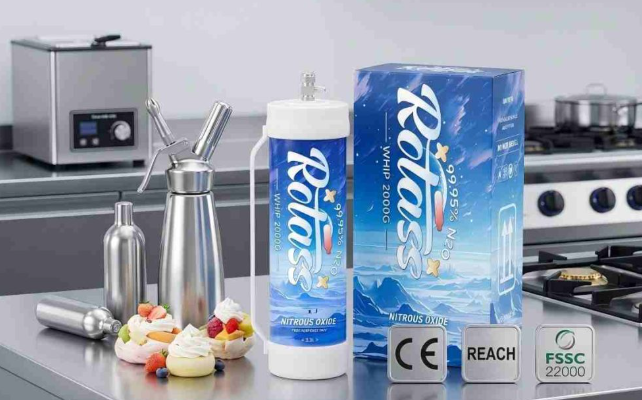
Professional kitchens often need equipment that supports consistent preparation while fitting smoothly into an established workflow. For businesses that prepare whipped cream and other culinary applications requiring controlled aeration, larger-capacity gas cylinders can be an important part of the equipment setup. The rotass whip 2000g is a product category that may be considered by food-service operators looking for a larger-format culinary gas solution.
Choosing equipment of this type requires attention to more than capacity alone. Compatibility, food-use suitability, storage, handling, dispenser requirements, and staff training all deserve consideration. A larger cylinder may be appropriate for some professional environments, but it should always be used strictly according to the manufacturer’s specifications.
Understanding 2000g Culinary Gas Cylinders
A 2000g cylinder represents a larger-capacity format compared with smaller culinary chargers. In professional food preparation, larger formats can be relevant where a kitchen regularly uses compatible equipment and needs an efficient supply for its workflow.
The intended application is particularly important. Culinary gas products should be used only for the purposes specified by the manufacturer. Food-service operators should review product documentation carefully before integrating a cylinder into their preparation process.
Unlike ordinary kitchen ingredients, pressurized cylinders require specific handling procedures. Their storage and use should therefore form part of a business’s overall kitchen safety system.
Why Capacity Can Matter
Capacity can influence how frequently equipment needs to be replaced or reloaded during routine operations. A busy café, bakery, restaurant, or catering operation may have substantially different requirements from a home kitchen.
For a commercial kitchen, a larger-capacity format may help simplify inventory planning when the product is compatible with the equipment already in use. However, capacity should never be the only purchasing consideration.
Businesses should evaluate:
- Equipment compatibility
- Manufacturer specifications
- Food-use suitability
- Storage requirements
- Staff handling procedures
- Kitchen consumption patterns
- Applicable safety requirements
This approach helps ensure that equipment selection is based on practical requirements rather than capacity alone.
Compatibility Comes First
One of the most important considerations when working with pressurized culinary equipment is compatibility.
A cylinder should only be connected to equipment specifically designed to work with it. Kitchen staff should consult the manufacturer’s documentation before attempting to assemble or operate a system.
Different dispensers and cylinders may have different connection systems, pressure requirements, or operating procedures. Assuming that every cylinder works with every dispenser can create unnecessary safety and performance issues.
For professional operations, it can be helpful to document which equipment is approved for use with each cylinder type. This reduces confusion when multiple employees share the same preparation area.
Applications in Food Preparation
Culinary aeration systems are commonly associated with whipped-cream preparation. Whipped cream can be used across a wide range of food and beverage products, including cakes, pastries, desserts, hot chocolate, coffee drinks, fruit dishes, and plated presentations.
In a commercial environment, the ability to prepare a consistent topping can contribute to efficient service. A standardized process may help employees produce similar textures and presentations during different shifts.
However, the specific application of a cylinder depends on the equipment and manufacturer’s instructions. Food businesses should avoid improvising with pressurized components or using them for purposes outside their intended culinary function.
Storage Considerations
Proper storage is an essential part of handling pressurized cylinders. Storage areas should follow the manufacturer’s recommendations and applicable local safety requirements.
Cylinders should be protected from excessive heat, direct sunlight, physical damage, and unsuitable environmental conditions. They should also be stored in a location where unauthorized handling can be prevented.
Commercial kitchens can establish a designated storage area for pressurized culinary products. This makes inventory management easier while reducing the possibility of accidental damage.
Clear staff procedures can also help ensure that new and used containers are handled appropriately.
Staff Training and Kitchen Procedures
A larger cylinder may require more attention to handling than a small disposable culinary charger. For this reason, staff training is especially important in professional kitchens.
Employees should know how to:
- Identify compatible equipment.
- Follow the manufacturer’s operating instructions.
- Store cylinders correctly.
- Recognize damaged or unsuitable containers.
- Keep pressurized products away from excessive heat.
- Follow appropriate disposal procedures.
Training does not need to be complicated. A short written procedure combined with practical instruction can help employees understand how equipment should be handled.
Maintaining a Consistent Preparation Process
The cylinder is only one component of a larger culinary system. The final quality of whipped cream can also depend on the ingredients, temperature, dispenser, cleaning routine, and preparation technique.
Cold cream, clean equipment, and proper assembly can contribute to more consistent results. Staff should follow a standardized process instead of changing several variables at once.
If the finished cream does not have the expected texture, employees can review the preparation steps and equipment instructions. This method is often more effective than assuming the cylinder itself is responsible for every performance issue.
Hygiene and Equipment Maintenance
Any food-contact equipment should be cleaned regularly. Dispensers, nozzles, seals, and removable components can collect residue if they are not cleaned correctly.
A professional kitchen should establish a cleaning schedule based on equipment instructions and its frequency of use. Employees should also understand how to safely disassemble and reassemble the dispenser.
Good maintenance can support both hygiene and equipment longevity. It can also reduce interruptions caused by blocked or poorly maintained components.
Selecting Equipment for Different Kitchen Sizes
Not every business needs a large-capacity cylinder. A small café with limited dessert service may have different requirements from a large catering company or bakery.
Before choosing a larger format, businesses should consider actual usage levels. If consumption is low, a smaller system may be more practical. If demand is high and compatible equipment is already available, a larger-capacity format may fit the workflow better.
The goal should be to match equipment capacity to genuine operational needs.
For businesses researching the Rotass Whip 2000g reviewing compatibility, handling requirements, and intended culinary use can provide a useful basis for evaluating the product.
Responsible Use of Pressurized Culinary Products
Pressurized products should always be treated as specialized equipment. They should not be punctured, heated, modified, or exposed to unnecessary physical force.
Users should follow all instructions supplied with the cylinder and compatible equipment. If a container appears damaged, it should not be used until its condition has been appropriately assessed according to the manufacturer’s guidance.
Responsible handling protects both employees and equipment while supporting a safer food-preparation environment.
FAQs
1. What does 2000g mean for a culinary cylinder?
The 2000g designation refers to the nominal amount of gas contained in the cylinder. The appropriate capacity depends on the equipment and intended kitchen requirements.
2. Can a 2000g cylinder work with any dispenser?
No. Compatibility depends on the specific equipment. Users should always follow the manufacturer’s compatibility and operating instructions.
3. How should a large culinary gas cylinder be stored?
It should be stored according to manufacturer recommendations, protected from excessive heat, direct sunlight, physical damage, and unauthorized handling.
Conclusion
A larger-capacity culinary cylinder can be useful in professional food-service environments where compatible equipment is used regularly. The rotass whip 2000g category is best evaluated by considering the complete kitchen workflow rather than capacity alone.
Compatibility, food-use suitability, safe storage, equipment maintenance, staff training, and responsible handling should all be part of the decision-making process. When these factors are properly addressed, professional kitchens can maintain a more organized and consistent approach to culinary preparation.