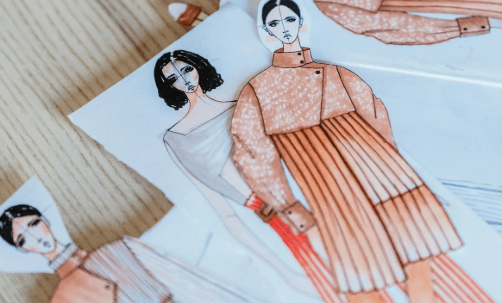
The way fashion designers communicate their ideas to stakeholders, buyers, and clients has undergone a massive transformation. The era of static, flat sketches is being replaced by dynamic, high-fidelity visualizations. For the modern professional, mastering the art of digital apparel presentation is no longer just about drawing skills; it is about leveraging AI to bridge the gap between a concept and a realistic 3D representation. One of the most powerful tools in this new workflow is the “Style-to-Sketch” process, which allows designers to refine and present their work with unprecedented speed and clarity.
The Evolution of Fashion Presentation
Historically, a presentation to a buyer involved a “lookbook” of 2D illustrations. While artistic, these drawings often left too much to the imagination. Buyers struggled to visualize the texture of the fabric, the way light would hit the surface, or how the garment would actually move on a human body.
AI-powered illustration tools have solved this “visualization gap.” By converting basic styles into detailed, rendered sketches and 3D models, designers can now present a “Digital Twin” of their vision. This ensures that everyone in the room—from the creative director to the financial investor—is seeing the exact same end product.
Key Strategies for Using Style-to-Sketch in Presentations
To truly master AI-powered illustration for professional use, designers should focus on three core areas:
1. High-Fidelity Rendering for Tactile Realism
When presenting a collection, the “feel” of the fabric is everything. Style-to-Sketch tools allow you to apply realistic textures to your digital apparel. Whether it is the porous nature of linen or the sleek reflectivity of technical sportswear, the AI renders these details in a way that looks photographic. In a presentation, this level of detail reduces the need for physical fabric swatches.
2. Rapid Iteration During Live Meetings
One of the most impressive ways to use AI in a presentation is “Live Iteration.” If a buyer suggests a change—such as a shorter hem or a different colorway—the designer can use AI tools to adjust the sketch instantly. This interactive approach makes the client feel like a participant in the design process and can significantly speed up the approval cycle.
3. Lighting and Environment Simulation
Traditional sketches are flat, but digital apparel exists in a three-dimensional world. Modern tools allow you to simulate different lighting conditions—such as a sunlit outdoor garden or a high-contrast indoor runway. This helps stakeholders see how the collection will perform in its intended environment, providing a layer of storytelling that static drawings cannot match.
See also: How Technology Helps Companies Stay Competitive
Streamlining the Workflow: From Concept to Slides
A professional presentation workflow should be as efficient as possible. AI-driven illustration streamlines this by:
- Automating Background Removal: Instantly placing your garments on clean, professional backgrounds or virtual avatars.
- Generating Multiple Angles: With one digital asset, you can present a 360-degree view, including close-ups of technical details like zippers, embroidery, or seam construction.
- Seamless Integration: Exporting these high-quality renders directly into presentation software or virtual showrooms without losing image quality.
The Competitive Edge of Digital Apparel
In a crowded market, the quality of your presentation can be the deciding factor in securing a contract or a production run. Using AI-powered illustration shows that a brand is forward-thinking and tech-savvy. It demonstrates a commitment to precision and a reduction in the “trial and error” that usually plagues the manufacturing phase.
Furthermore, these digital assets can be reused throughout the brand’s ecosystem. The same 3D sketch used in a boardroom presentation today can be used for social media marketing tomorrow, providing a massive return on investment for the creative team.
Sustainability: The Silent Selling Point
In 2026, every fashion presentation should address environmental impact. By highlighting that the collection was designed and approved using a digital-first workflow, designers can prove a commitment to sustainability. Presenting digital apparel instead of physical samples sends a powerful message: the brand is saving water, reducing textile waste, and lowering its carbon footprint by making critical decisions in a virtual space.
Conclusion
Mastering AI-powered fashion illustration is about more than just software proficiency; it is about enhancing the narrative of your designs. Tools like Style-to-Sketch are empowering designers to present their work with a level of professionalism and realism that was previously reserved for major luxury houses with massive budgets.
As the industry continues to move toward a more digital future, the ability to create, iterate, and present digital apparel with speed and accuracy will be the hallmark of the successful modern designer. By turning your sketches into live, interactive digital assets, you aren’t just presenting a collection—you are presenting the future of fashion.
