Strong structures begin below the surface. While architectural design, materials, and construction techniques receive much of the visible attention, the ground beneath a building plays an equally important role in determining its long-term stability. When surface soils cannot safely support the required structural loads, piling can provide a dependable foundation solution by transferring those loads into deeper, more competent ground.
High-performance piling contractors bring specialized equipment, technical knowledge, and field experience to complex ground engineering projects. Their role extends beyond installing piles. They help coordinate foundation requirements, site conditions, equipment access, installation methods, quality control, and project schedules to create a foundation system suited to the demands of the structure.
From commercial developments and industrial facilities to bridges, infrastructure, and challenging urban construction sites, professionally executed piling can provide the deep foundation support necessary for demanding projects.
The Role of Piling in Ground Engineering
Piling is a deep foundation technique used when near-surface soils are unable to provide adequate support for a structure. Instead of relying primarily on shallow bearing soils, piles extend deeper into the ground where suitable resistance can be developed.
The appropriate piling method depends on structural loads, ground conditions, site limitations, environmental considerations, and project requirements.
Transferring Loads Below Weak Soil
One of the primary purposes of a pile foundation is to move structural loads through weaker upper layers toward stronger soil or rock. Depending on the pile system and site conditions, support may come from end bearing, shaft resistance, or a combination of mechanisms.
The design must account for the expected structural loads and the characteristics of the subsurface profile.
Supporting Complex Construction Projects
Piling can be used for a wide range of structures, including multi-story buildings, industrial facilities, transportation infrastructure, retaining systems, towers, and other projects where foundation demands exceed the capabilities of conventional shallow systems.
Professional contractors help translate engineering requirements into practical field operations.
Understanding Different Piling Methods
There is no universal piling technique suitable for every project. Different methods offer different advantages depending on soil conditions, access, load requirements, and environmental constraints.
Driven Piles
Driven piles are installed by applying controlled impact or vibration to advance the pile into the ground. They can be manufactured from materials such as steel, concrete, or timber depending on the application.
Because driven piles are installed rather than cast in place, they can provide an efficient solution for certain large-scale projects. However, noise, vibration, access, and nearby structures must be considered during planning.
Bored Piles
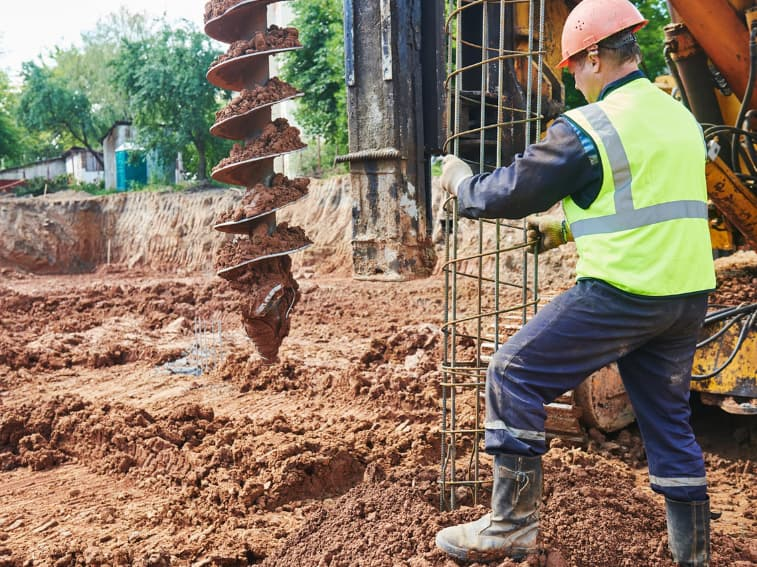
Bored piles are formed by drilling or excavating a hole into the ground and then installing reinforcement and concrete as required by the design.
This method can be suitable where large pile diameters or substantial load capacities are required. It can also be advantageous on sites where controlling vibration is important.
Specialized Piling Systems
Other piling techniques may be appropriate for difficult access, restricted urban sites, temporary works, underpinning, or specialized structural requirements.
A knowledgeable contractor evaluates the project rather than assuming that one installation method will work for every site.
The Importance of Ground Investigation
Successful piling begins with understanding what is beneath the surface. Soil conditions can vary substantially across a site, and assumptions about the ground can lead to inappropriate foundation decisions.
Using Geotechnical Information
Geotechnical investigations can provide information about soil layers, groundwater, rock formations, density, strength, and other conditions relevant to pile design.
Engineers use this information to determine suitable pile types, dimensions, depths, spacing, and expected capacity.
Adapting to Actual Site Conditions
Even detailed investigations may not capture every variation within a construction site. During installation, contractors may encounter conditions that differ from expectations.
Experienced piling teams monitor the installation process and communicate unusual conditions so that appropriate engineering decisions can be made.
Precision in Pile Installation
Foundation piles are installed according to specific engineering requirements. Their position, depth, alignment, and structural properties can affect the performance of the overall foundation system.
Maintaining Accurate Alignment
Piles may need to be installed within defined tolerances for position and verticality. Excessive deviation can affect load distribution or interfere with pile caps and other structural elements.
Modern equipment, experienced operators, and careful site layout can support accurate installation.
Controlling Installation Depth
The required pile depth depends on the design and ground conditions. Contractors need to follow the specified installation criteria rather than stopping simply because a convenient depth has been reached.
Field measurements and installation records help demonstrate whether the required criteria have been achieved.
Managing Groundwater and Difficult Soil Conditions
Ground engineering projects frequently encounter challenging subsurface conditions. Groundwater, loose soils, dense layers, rock, fill material, or unstable excavation walls can affect piling operations.
Planning for Groundwater
Water encountered during drilling or excavation may require specialized procedures to maintain bore stability and protect the quality of the completed pile.
The appropriate approach depends on soil permeability, groundwater levels, pile type, and construction conditions.
Working Through Variable Ground
Some sites contain multiple soil layers with different engineering characteristics. Contractors must be prepared for changes in resistance or drilling behavior as piles progress.
Good communication between the installation crew, geotechnical specialists, and structural engineers can help address these conditions efficiently.
High-Performance Equipment and Technology
Modern piling operations rely on specialized machinery and monitoring systems to improve productivity and installation control.
Selecting Equipment for the Site
Rig size, lifting capacity, drilling tools, access requirements, and ground conditions all influence equipment selection. Large projects may require heavy-duty rigs, while restricted sites may need compact machinery designed for limited working space.
Selecting equipment appropriately can help improve efficiency without creating unnecessary disruption.
Monitoring Installation Data
Modern piling equipment can provide useful field information during installation. Depending on the method, contractors may monitor drilling parameters, penetration rates, torque, pressure, depth, or other indicators.
These records can support quality control and help identify changes in ground conditions.
Working Efficiently on Complex Sites
Piling is often performed early in a construction schedule, meaning delays can affect many activities that follow. High-performance contractors therefore need strong project management as well as technical expertise.
Coordinating Site Logistics
Piling operations may involve large rigs, cranes, concrete deliveries, reinforcement cages, spoil removal, temporary works, and restricted access routes.
Efficient scheduling of these activities can reduce downtime and keep the work area organized.
Minimizing Construction Disruption
Urban and constrained sites may be surrounded by occupied buildings, roads, utilities, and sensitive infrastructure. Contractors must consider noise, vibration, traffic, equipment movement, and working hours.
The selected piling method can have a significant effect on the level of disruption experienced by surrounding properties.
Quality Control Throughout the Project
Foundation work requires consistent quality control because completed piles are often hidden below ground and cannot be visually inspected in the same way as above-ground construction.
Verifying Materials and Installation
Concrete quality, reinforcement, pile dimensions, installation records, and other construction parameters may need to be documented according to project specifications.
Maintaining accurate records provides evidence that the foundation work was performed according to the required standards.
Pile Testing and Verification
Depending on the project, different testing methods may be used to assess pile performance or installation quality. Testing requirements are generally established by the project’s engineering design and applicable standards.
Proper testing can provide additional confidence that the foundation system will perform as intended.
Safety in Piling Operations
Heavy machinery, deep excavations, suspended loads, drilling equipment, and underground conditions make piling a specialized construction activity requiring careful safety management.
Protecting Workers and Equipment
A professional piling contractor establishes procedures for equipment operation, site access, lifting activities, exclusion zones, and communication between workers.
Safe working practices should remain part of every stage of the project, from mobilization through demobilization.
Identifying Underground Risks
Construction sites may contain existing utilities, foundations, buried structures, or other obstructions. Identifying these potential hazards before piling begins can reduce the risk of damage and unexpected interruptions.
Choosing a High-Performance Piling Contractor
Selecting the right contractor can have a major impact on the success of a ground engineering project.
Evaluate Technical Experience
Look for contractors with experience in the specific piling methods and project environments relevant to your development. A contractor experienced with large open sites may have different capabilities from one specializing in restricted urban work.
Relevant experience can help the team anticipate practical challenges before installation begins.
Consider Project Management Capabilities
A technically capable contractor also needs to manage schedules, equipment, materials, documentation, site logistics, and communication.
Strong project management can help maintain momentum while reducing avoidable delays.
See also: The Ultimate Guide to Business Growth
Prioritize Clear Communication
Piling projects often involve structural engineers, geotechnical consultants, general contractors, developers, inspectors, and other stakeholders. Clear communication helps ensure that everyone understands installation requirements and responds quickly to unexpected conditions.
Building a Foundation for Long-Term Performance
The purpose of piling is not simply to place structural elements underground. It is to establish a foundation system capable of supporting the structure throughout its intended service life.
Good piling contractors understand the relationship between engineering design and field execution. They recognize that accurate installation, appropriate equipment, quality materials, testing, documentation, and site management all contribute to the finished foundation.
Conclusion
High-performance piling contractors provide essential expertise for projects that require dependable deep foundation support. By combining specialized installation techniques, modern equipment, ground engineering knowledge, quality control, and efficient project coordination, they help prepare challenging sites for successful construction.
From driven and bored piles to specialized foundation systems, the appropriate solution depends on the project’s structural demands and subsurface conditions. Careful geotechnical evaluation, precise installation, field monitoring, testing, and comprehensive documentation all contribute to reliable results.
For developers, builders, and property owners, selecting an experienced piling contractor is an important investment in the foundation of the entire project. When technical expertise and efficient execution come together, piling can provide the deep structural support needed to build confidently on complex ground conditions and create foundations designed for lasting performance.