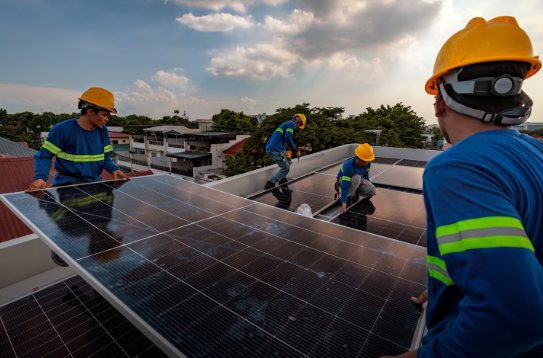
The global transition toward renewable energy has accelerated as businesses, governments, and households look for cleaner and more dependable ways to meet growing electricity demand. Solar power has become one of the most accessible renewable technologies because photovoltaic systems can be installed in many different environments, from residential rooftops to large utility-scale projects.
The Philippines is particularly well positioned to benefit from solar energy. Its geographic location provides substantial sunlight throughout the year, creating opportunities for both distributed and large-scale photovoltaic installations. As demand increases, understanding the solar market, technology options, and supplier considerations becomes increasingly important.
Why Solar Energy Is Growing
Traditional electricity generation depends heavily on fossil fuels in many parts of the world. These sources can create environmental concerns while also exposing energy markets to fuel-price fluctuations.
Solar power provides an alternative because sunlight is naturally available and can be converted directly into electricity through photovoltaic modules.
A solar installation can also be scaled according to the needs of the user. A small rooftop system may support household electricity consumption, while larger projects can supply commercial facilities or contribute electricity to the wider grid.
See also: Rotass Whip 2000g: Understanding Large-Capacity Culinary Gas Cylinders
Understanding the Philippine Market
The Philippines has many characteristics that support solar development. The country receives significant solar radiation, while electricity demand continues to grow alongside economic activity and urban development.
Remote communities can also benefit from decentralized renewable-energy systems where extending conventional grid infrastructure may be difficult or expensive.
As the market develops, consumers and project developers need to understand the differences between equipment manufacturers, installers, distributors, and system integrators.
What to Consider When Comparing Manufacturers
When researching solar panel manufacturers Philippines, buyers should avoid focusing exclusively on headline prices.
Several factors can affect the long-term value of a photovoltaic module:
- Conversion efficiency
- Product warranty
- Degradation rate
- Temperature performance
- Mechanical strength
- Certification
- Quality-control procedures
- Manufacturing experience
- Technical support
A panel with a slightly higher initial cost may provide better long-term value if it delivers reliable performance over many years.
Panel Efficiency and Available Space
Efficiency is especially relevant when installation space is limited.
Higher-efficiency modules can generate more electricity from the same physical area. This can be useful for rooftops where available space is restricted by ventilation systems, structural elements, or other equipment.
However, efficiency should not be evaluated in isolation. Temperature behavior, warranty conditions, degradation, and system compatibility also deserve consideration.
Evaluating Product Quality
Solar panels are expected to operate outdoors for many years. They must therefore withstand environmental exposure such as sunlight, rain, humidity, wind, and temperature fluctuations.
Manufacturing quality can influence long-term reliability. Buyers should review technical documentation and certifications rather than relying solely on marketing claims.
A professional project should also consider installation quality because even high-quality panels can underperform if the supporting electrical and structural systems are poorly designed.
The Importance of Professional Installation
Solar modules are only one part of a complete photovoltaic system.
Other components may include inverters, mounting structures, cables, protection equipment, monitoring systems, and energy-storage technologies.
Proper system design ensures that these components work together effectively. Installers should consider roof condition, orientation, shading, electrical requirements, local weather conditions, and future maintenance.
Residential and Commercial Applications
Solar technology can support different types of users.
Homeowners may install rooftop systems to solar panel manufacturers Philippines reduce dependence on grid electricity. Businesses can use photovoltaic systems to offset daytime electricity consumption, especially when their operations involve offices, warehouses, manufacturing facilities, or retail locations.
Large projects can use ground-mounted arrays to generate electricity at utility scale.
Each application requires a different approach to system sizing and financial planning.
Looking Beyond the Initial Investment
Solar equipment should be evaluated over its expected operating life rather than only by its initial purchase price.
Maintenance requirements, energy generation, warranty coverage, replacement costs, and system degradation can all influence total value.
A professional feasibility assessment can help determine whether a proposed installation meets the user’s energy and financial objectives.
FAQs
Why is solar energy suitable for the Philippines?
The Philippines receives significant sunlight throughout the year, making photovoltaic generation a practical renewable-energy option in many locations.
What should buyers consider when choosing solar panels?
Important factors include efficiency, durability, warranty, certifications, degradation, temperature performance, and supplier reliability.
Are solar panels suitable for businesses?
Yes. Commercial facilities can use solar systems to offset electricity consumption, particularly where substantial daytime energy demand exists.
Conclusion
Solar energy offers the Philippines an important opportunity to diversify electricity generation and increase renewable-energy adoption. As the industry develops, buyers should evaluate equipment based on quality, performance, durability, warranty, and long-term value.
Choosing the right technology and combining it with professional system design can help homeowners, businesses, and larger projects build reliable solar installations capable of delivering benefits for many years.