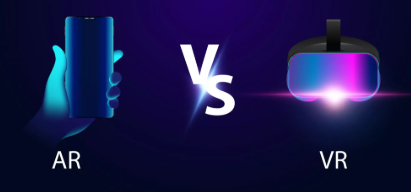
The distinction between Augmented Reality (AR) and Virtual Reality (VR) is crucial for understanding their respective impacts on technology and society. AR integrates digital elements into the real world, enhancing user experiences without detachment from reality. Conversely, VR creates entirely immersive environments, isolating users from their surroundings. Exploring these differences reveals insights into their applications across various sectors, prompting a closer examination of how each technology shapes interactions and experiences in everyday life.
Defining Augmented Reality (AR)
Augmented Reality (AR) represents a transformative intersection of the digital and physical worlds, enhancing real-life environments through the overlay of computer-generated content.
AR technology enables immersive AR experiences that blend seamlessly with users’ surroundings, fostering interaction and engagement.
Understanding Virtual Reality (VR)
Virtual Reality (VR) immerses users in entirely simulated environments, creating a sense of presence that transports them beyond the physical world.
This technology enables immersive experiences that engage users in interactive scenarios, fostering a deep connection to the virtual space.
Through advanced graphics and responsive user interaction, VR allows individuals to explore limitless possibilities, making it a powerful tool for entertainment, education, and training.
Key Differences Between AR and VR
The distinction between augmented reality (AR) and virtual reality (VR) lies primarily in their interaction with the real world.
AR enhances user experience by overlaying digital information onto the physical environment, allowing for seamless technology integration.
In contrast, VR immerses users completely in a simulated environment, offering an entirely different sensory experience.
Understanding these differences is crucial for leveraging their unique capabilities effectively.
See also: AI in Healthcare: Opportunities and Challenges
Applications of AR and VR in Various Industries
Innovative technologies such as augmented reality (AR) and virtual reality (VR) are transforming various industries by enhancing processes and experiences.
In gaming applications, these technologies immerse users in captivating worlds, while healthcare innovations leverage AR and VR for training, simulations, and patient treatment.
This convergence of technology not only improves engagement but also fosters creativity, ultimately leading to more effective solutions across diverse sectors.
Conclusion
In a world increasingly defined by digital interaction, the distinction between Augmented Reality and Virtual Reality becomes crucial. Each technology offers a unique perspective on reality—AR enhances it, while VR transports users away from it. As industries harness the potential of both, the question remains: which will dominate the future landscape of technology? With advancements continually reshaping possibilities, the answer may surprise us, hinting at a convergence that could redefine our understanding of reality itself.