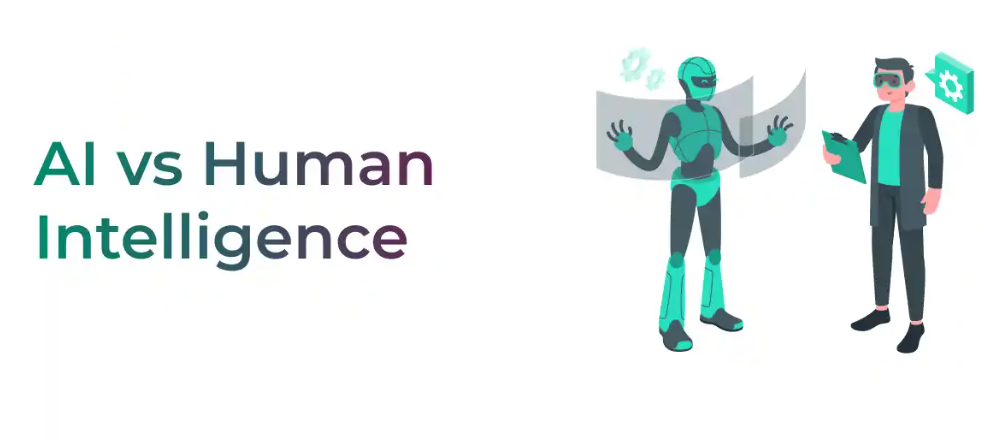
The distinctions between AI and human intelligence are profound and multifaceted. AI processes information at remarkable speeds, yet lacks the ability to grasp emotional nuances. In contrast, humans excel in contextual understanding, enriched by personal experiences. This disparity extends to creativity and collaboration, where human traits significantly influence outcomes. Understanding these differences is crucial for optimizing interactions between both entities. The implications of this knowledge raise important questions about the future of collaboration.
Cognitive Abilities: Processing vs. Understanding
While artificial intelligence excels in processing vast amounts of data at unprecedented speeds, human intelligence encompasses a deeper level of understanding that involves emotional and contextual awareness.
Analytical reasoning enables humans to interpret information within broader frameworks, allowing for nuanced comprehension. This contextual awareness informs decisions and fosters creativity, showcasing cognitive abilities that extend beyond mere data processing, emphasizing the significance of understanding in human experience.
Emotional Intelligence: Empathy in Humans vs. Algorithms in AI
Emotional intelligence represents a critical aspect of human interaction, defined by the ability to recognize, understand, and respond to emotions in oneself and others.
In contrast, AI exhibits an algorithmic response based on emotional awareness derived from data patterns rather than genuine empathy.
This fundamental difference underscores the limitations of AI in replicating the nuanced emotional understanding inherent in human relationships.
See also: AI in Game Design
Creativity and Innovation: The Human Touch vs. Machine Learning
Creativity and innovation represent dimensions of human intelligence that are deeply intertwined with personal experiences, cultural influences, and subjective interpretation.
Unlike machine learning, which relies on data patterns, human artistic expression emanates from imaginative thinking, enabling the creation of novel ideas and concepts.
This unique capacity for original thought and emotional resonance distinguishes human creativity, affirming its significance in a world increasingly dominated by algorithms.
Collaboration and Communication: Social Skills vs. Data Sharing
As organizations increasingly rely on technology, the dynamics of collaboration and communication are evolving, revealing a stark contrast between human social skills and machine-driven data sharing.
Human communication styles facilitate nuanced interactions and foster team dynamics, while AI enables efficient data sharing devoid of emotional context.
This disparity highlights the need for balance, as both elements are crucial for effective collaboration in modern workplaces.
Conclusion
In the grand arena of intellect, humans reign supreme with their emotional depth and creative flair, wielding empathy like a superhero’s cape against the algorithmic forces of AI. While machines can process data at lightning speed, they remain mere shadows in the vibrant tapestry of human experience. The collaboration between humans and AI, thus, resembles a dance where one partner pirouettes with emotional finesse and the other executes precise, albeit soulless, mechanical steps. The spectacle is nothing short of mesmerizing.