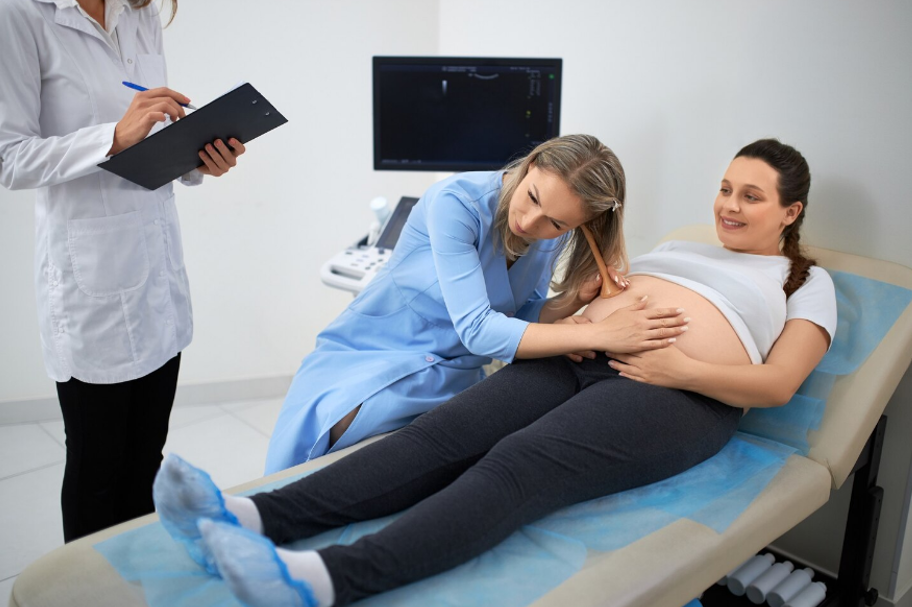
Pregnancy basically rewires your body over nine months, and not always for the better. Hormones loosen ligaments, allowing the pelvis to spread for delivery. The growing belly drags your center of gravity forward. The lower back compensates by arching harder. Hips widen. Pelvis tips forward. By month seven or eight, the spine is doing structural work it wasn’t really designed for, while the ligaments meant to stabilize it are deliberately less stable than usual. Most women feel some version of this somewhere in their body. For some, it’s lower back pain. For others, hip pain or sciatic flares that wax and wane. T
Plenty of women just push through the discomfort, or end up reaching for over-the-counter pain medications they probably shouldn’t be using consistently for nine straight months. There’s a third option that many pregnant women are never told about. A prenatal chiropractor whose entire practice is built around pregnancy biomechanics works differently from somebody who treats adults all day and sees a pregnant patient occasionally. The pressures used aren’t adult.
Costa Mesa and the wider Orange County area aren’t short on chiropractic options for this. Blooming Chiropractic is one of the offices in this region that offer prenatal chiropractic services for expectant moms. Nothing here recommends one provider over another. What follows is a practical look at what prenatal chiropractic actually does, why pregnancy responds the way it does, and what to consider before making that first appointment.
Why Pregnancy Creates Discomfort
Three things happen at once and combine into pretty much everything women feel mechanically. Relaxin is the first one. It’s a hormone that ramps up sharply during pregnancy and loosens connective tissue throughout the body, allowing the pelvis to expand when needed. Then comes the center-of-gravity shift, which the growing uterus pulls steadily forward as the baby grows, forcing the lumbar spine into a deeper arch than it normally holds. The third piece is weight. Increased pelvic load combined with looser ligaments means the sacroiliac joints and pubic symphysis are moving in patterns they don’t typically need to move in.
How a particular woman experiences all of this depends on her anatomy and her trimester. It could be lower back pain. Could be sacroiliac pain, sciatica running down a leg, round ligament tightness, pubic symphysis pain, hip pain, sometimes pain up around the ribs. ACOG’s back pain during pregnancy puts the prevalence of pregnancy-related back pain at roughly two-thirds of pregnant women, and traces the causes back to mostly mechanical causes. Weight, gravity shift, hormones, posture compensations, and stress.
Knowing that the underlying causes are mechanical is useful. It explains why prenatal chiropractic actually does something. There’s nothing magical happening in the room. The work targets specific joint mechanics and muscle tension arising from the structural changes pregnancy brings to the body.
See also: The Ultimate Guide to Business Growth
Pelvic Balance and Labor Preparation
The argument for prenatal chiropractic isn’t only about feeling better day to day. There’s a structural case underneath. A balanced pelvis with appropriate ligament tension creates more room for the baby and improves the odds that the baby settles into a good birth position. An unbalanced pelvis with restricted soft tissue can subtly limit how the baby moves and where it ends up positioned for delivery.
Research on pregnancy-related lumbopelvic pain has been pointing increasingly toward combined treatment over single interventions. The 2025 evidence review on prevention and treatment of LBP and PGP during and after pregnancy concluded that combined active treatment, meaning manual therapy plus exercise plus patient education, outperformed any of those approaches done alone. The evidence base for chiropractic operating purely on its own is mixed. As one piece of a broader prenatal plan that incorporates exercise and education, the integration tends to support better outcomes.
Which is why most experienced prenatal chiropractors are pretty emphatic that their work complements rather than replaces prenatal medical care, prenatal physical therapy, prenatal yoga, and home exercise routines. The combined version produces results that no single piece can match.
Picking the right provider
Webster Technique certification is the floor. A pediatric or family practice focus on top of that is a stronger signal. Tables and equipment specifically built for pregnant patients, or other clear evidence that the practice has actually thought through how to position a third-trimester body, is another good marker.
Communication style is also worth paying attention to. A good prenatal chiropractor wants the full context. The pregnancy details. Prior births, if there were any. Current symptoms. What the OB has said so far. What other care is the patient currently receiving? What goals matter to her? The intake conversation isn’t supposed to feel rushed.
Worth asking on that first call: How many pregnant patients do you see per week? What specific training do you have in prenatal? Do you regularly coordinate with OBs and midwives? What’s your protocol if I’m in a higher-risk category? A confident prenatal-trained provider has clear, immediate answers to all of those without dancing around any of them.
Prenatal chiropractic doesn’t replace OB care. It fills in gaps OB care doesn’t typically address, covering the mechanical realities of carrying a baby for nine months in ways most prenatal medical visits don’t. Benefits show up as concrete things: less pain, better sleep, easier mobility, better pelvic mechanics that translate into a smoother labor for many women. When done correctly, the work is gentle and produces real value when woven into a broader care plan rather than treated as a standalone fix. The provider chosen matters more than almost anything else. The right one becomes part of the team, carrying a woman through pregnancy in better shape than she’d be without them.